
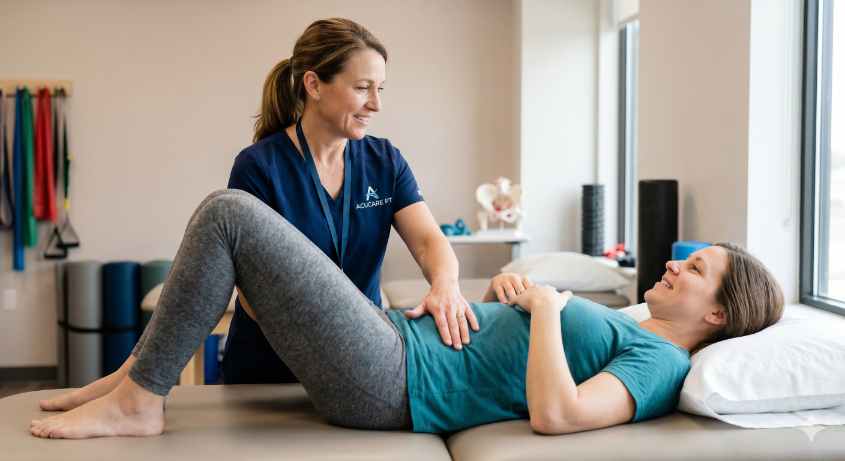
Pelvic floor physical therapy is a specialized rehabilitative approach that treats the muscles, ligaments, and connective tissues at the base of the pelvis. Beyond managing incontinence, it effectively resolves chronic pelvic pain, pregnancy-related discomfort, and bowel dysfunction for both women and men. By restoring muscle coordination and strength, this therapy improves core stability and enhances overall quality of life.
A specialized treatment focusing on the “hidden” muscles of the core to restore function and eliminate pain.
- Eliminate Leaking: Treat stress and urge incontinence without surgery.
- Resolve Pain: Address chronic pelvic, hip, or lower back pain at the source.
- Support Recovery: Specialized care for postpartum healing and post-surgical rehabilitation.
- Holistic Connection: Integrate breathing and functional medicine for total body wellness.
Understanding the Pelvic Floor
The pelvic floor is a bowl-shaped group of muscles that supports your internal organs and stabilizes your spine. When these muscles are too tight (hypertonic) or too weak (hypotonic), it can lead to a variety of symptoms that many people mistakenly assume are just a normal part of aging or motherhood.
Definition: Pelvic Floor Dysfunction
A condition where the muscles of the pelvic floor do not relax or coordinate correctly to allow for healthy bowel movements, urination, or comfortable physical activity.
Who Can Benefit from Pelvic Health Therapy?
At Acucare Physical Therapy, we treat a wide range of patients. While often associated with women’s health, pelvic therapy is vital for men and athletes as well.
Common Conditions Treated
- Postpartum Recovery: Healing diastasis recti and restoring core strength after childbirth.
- Pelvic Pain: Addressing conditions like endometriosis, interstitial cystitis, or prostatitis.
- Incontinence: Stopping accidental leakage during exercise, sneezing, or coughing.
- Chronic Prostatitis: Helping men manage pelvic floor tension and discomfort.
Comparison: Physical Therapy vs. “Just Doing Kegels”
| Feature | Traditional Kegels | Pelvic Floor PT |
| Approach | Simple muscle contraction | Comprehensive muscle coordination |
| Focus | Strength only | Strength, flexibility, and relaxation |
| Personalization | One-size-fits-all | Custom plan based on internal/external evaluation |
| Success Rate | Limited if muscles are too tight | High for complex pain and dysfunction |
The Connection Between Breathing and Pelvic Health
Your pelvic floor acts as the “bottom” of your pressure system, while your diaphragm is the “top.” This is why our specialized Breathing Therapy is often integrated into pelvic health plans.
If you aren’t breathing correctly, you are likely putting unnecessary downward pressure on your pelvic floor. By mastering functional breathing, you can naturally reduce pelvic tension and improve the efficiency of every movement.
What to Expect During Treatment
Starting pelvic floor therapy can feel intimidating, but our Sioux Falls clinic provides a private, compassionate environment.
- Initial Consultation: We discuss your medical history and specific symptoms in a private setting.
- External Assessment: We evaluate your posture, hip mobility, and abdominal wall.
- Functional Evaluation: We may assess the coordination of your pelvic muscles during movement.
- Custom Treatment Plan: This may include manual therapy, biofeedback, and specialized exercises.
- Integration: We incorporate functional medicine and lifestyle adjustments to support long-term healing.
Frequently Asked Questions
Is pelvic floor therapy only for women?
No. At Acucare, we provide Men’s Health Therapy as well. Men often require pelvic PT for chronic pelvic pain, post-prostate surgery recovery, and bowel or bladder dysfunction.
What should I wear to my pelvic PT appointment?
Wear comfortable, loose-fitting clothing that allows you to move easily, similar to what you would wear for a standard orthopedic physical therapy session.
How long does it take to see results?
While every patient is unique, many experience noticeable improvements in symptom management within 4 to 6 sessions as muscle coordination improves and inflammation decreases.
Does pelvic floor therapy hurt?
The goal of therapy is to reduce pain, not cause it. Your therapist works within your comfort level, using gentle techniques to release tension and improve muscle function.
Can pelvic floor PT help with lower back pain?
Yes. The pelvic floor is a critical part of your core. If these muscles are weak or dysfunctional, your lower back often overcompensates, leading to chronic aches.
Do I need a referral for pelvic health therapy?
In many cases, you can start physical therapy without a physician’s referral in South Dakota. We can help you determine your specific insurance requirements.
Restoring Your Confidence and Comfort
Pelvic health is a vital component of your overall physical well-being. Whether you are a runner struggling with leakage or someone dealing with persistent pelvic pain, you don’t have to “just live with it.” At Acucare Physical Therapy, we combine clinical expertise with a holistic, functional approach to help you return to the activities you love, pain-free.
Author: Acucare Physical Therapy Team
Last Updated: May 2026
Credentials: Led by Sue Creel, PT, specializing in orthopedic and functional medicine-integrated physical therapy in Sioux Falls, SD.
Recent Comments